AI News 2026: Major Breakthroughs and What They Mean
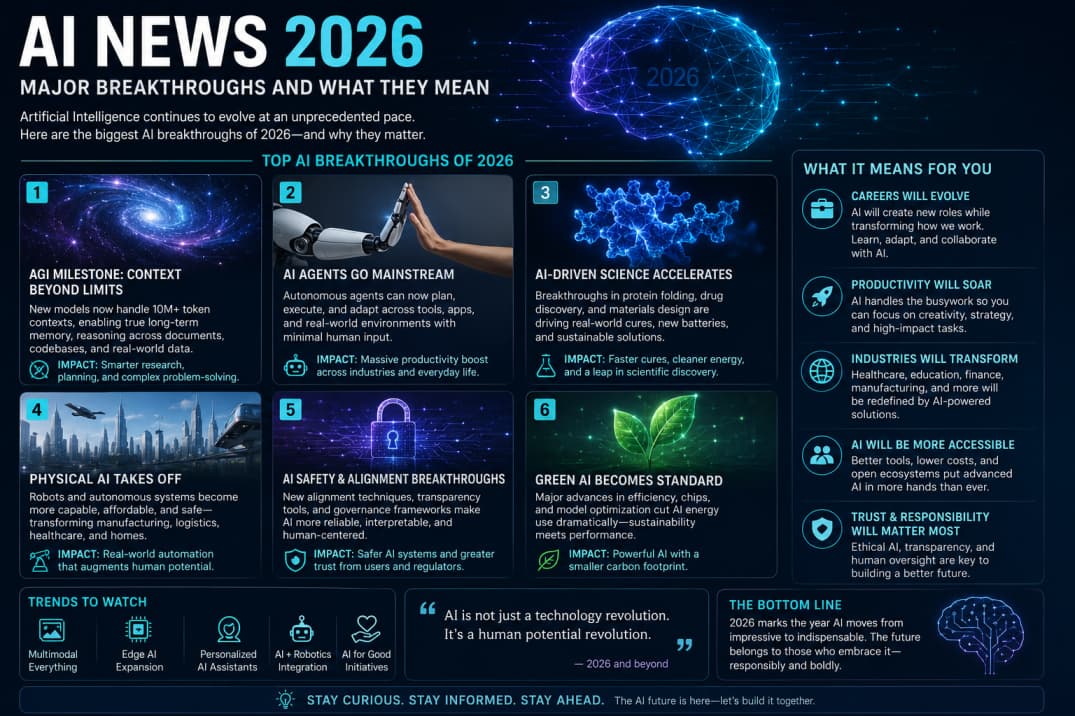
Artificial intelligence headlines arrive daily, but separating durable shifts from hype helps you plan tools, careers, and privacy habits. This roundup focuses on changes that affect how businesses ship software and how consumers interact with devices.
Larger context windows and reasoning tools
Leading models now handle longer documents and multi-step tasks with fewer manual prompts. That improves contract review, research summaries, and code refactoring, but also increases the risk of confident errors if humans skip verification.
Regulation and transparency pressure
Governments continue drafting rules on training data, labeling AI-generated content, and critical infrastructure use. Companies publish more model cards and safety reports, though standards still vary by region and industry.
Enterprise adoption beyond pilots
Support teams, marketing groups, and engineering orgs move from experiments to governed workflows with access controls, audit logs, and approved prompt libraries. Shadow IT usage of consumer chatbots remains a security concern IT departments watch closely.
On-device AI in phones and PCs
Chipmakers emphasize neural processing units that run smaller models locally for transcription, photo edits, and assistant features. Hybrid setups send only necessary data to the cloud, improving latency and privacy for some tasks.
Labor and skills conversation
Automation targets repetitive knowledge work first—drafting, tagging, first-pass analysis—while human review stays critical. Upskilling in prompt design, data literacy, and domain expertise becomes part of many job descriptions.
What consumers should do now
Enable two-factor authentication on AI accounts, avoid pasting secrets into chats, and verify factual claims before sharing. Treat AI output as a draft, not an authority.
Outlook
Expect tighter integration into office suites and creative software, plus ongoing debates about copyright and energy use. Staying informed beats chasing every product launch.