The Best Indian Street Style Trends Making Global Waves in 2026
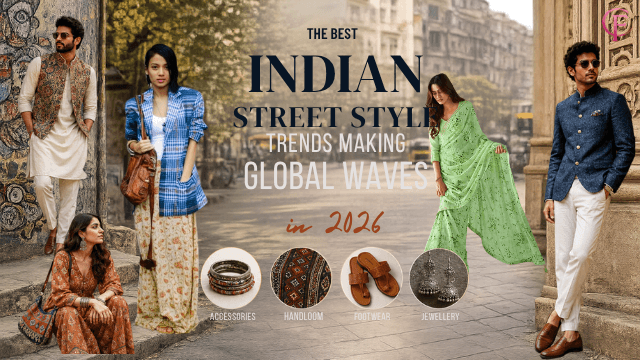
Indian street style has always been a rich, extraordinary tapestry of tradition and modernity — but in 2026, it is getting global attention it has long deserved. From the streets of Mumbai and Delhi to international fashion weeks, Indian fashion's confident fusion of traditional craft and contemporary silhouettes is turning heads worldwide.
Why Indian Street Style Is Having a Global Moment
Several things have converged to put Indian street style at the global forefront. Social media has given a platform to a new generation of Indian fashion content creators who are redefining what "Indian fashion" means. International designers are openly referencing Indian craft traditions — block printing, hand embroidery, natural dyeing, and artisanal weaving. And a growing Indian middle class with global exposure and cultural confidence is driving an extraordinary domestic fashion renaissance.
The result: a street style scene that does not choose between Indian and Western — it embraces both simultaneously, on its own terms.
Fusion That Actually Works — Kurta-and-Denim
One of the most widely photographed combinations in Indian street style right now is the kurta worn with jeans or denim. Not as a compromise between traditional and Western — as a genuinely stylish, intentional aesthetic.
A short or straight-cut kurta in block-printed cotton with slim dark denim and clean white trainers or kolhapuri sandals is simple, comfortable, and effortlessly stylish. The key is fabric quality (a crisp cotton or linen kurta looks intentional) and fit (both pieces should fit well, not oversized).
This combination works brilliantly across age groups and body types and is appropriate for everything from college days to casual work environments.
Contemporary Ethnic Sets
Matching ethnic co-ord sets — kurti and palazzo, kurta and dhoti pants, short top and wide skirt in coordinating block prints or embroidery — are a major category in Indian street fashion right now. They photograph beautifully, are easy to wear, and feel culturally rooted while looking entirely modern.
The colour palettes trending in Indian street fashion in 2026 include terracotta with indigo, mustard with forest green, rust with cream, and soft vintage rose with antique gold. These earthy, artisan-influenced palettes feel simultaneously traditional and incredibly contemporary.
The Indian Handloom Revival
Among younger fashion consumers in India especially, handloom is experiencing a profound revival. Khadi, handwoven cottons, Chanderi, Maheshwari, Ikat, and Ajrakh are increasingly found in modern, minimal silhouettes — not just traditional forms.
A boxy Chanderi silk shirt worn with wide-leg linen trousers. An Ajrakh block-print dress worn with clean white trainers. A Khadi co-ord set in natural undyed tones. These pieces connect the wearer to artisan tradition while looking entirely current. They also carry the additional pride of supporting Indian craft communities.
Accessories — The Signature of Indian Street Style
If there is one element that most distinctly marks Indian street style globally, it is the accessories. The extraordinary richness of Indian accessory craft — oxidised silver, kundan, meenakari, beaded embroidery, block-printed bags, leather juttis and kolhapuris — provides a visual language impossible to replicate elsewhere.
In Indian street style 2026, accessories are often the defining element — worn generously, mixed with modern pieces, and chosen with clear personal affection rather than strict traditional protocol.
Stacked bangles with a contemporary linen shirt. Jhumka earrings with wide-leg trousers and a simple tee. A hand-embroidered clutch with a minimal Western dress. Kolhapuri sandals with almost everything. These combinations feel fresh precisely because they refuse the idea that traditional accessories must only accompany traditional clothes.
Sarees on the Street
The contemporary street saree — cotton or linen sarees draped casually and paired with everyday footwear — is a distinctly Indian phenomenon with growing international admiration.
Worn with a simple tee tucked in as the blouse. Draped over a fitted shirt. Paired with trainers or flat juttis. These everyday sarees resist the idea that the saree is only appropriate for formal occasions and reclaim it as practical, gorgeous daily wear. This movement is driven largely by younger Indian women who love their heritage and refuse to silo it.
Indian Menswear Finding Its Voice
Indian men's street style is evolving with equal creativity. The nehru collar bandhgala worn with denim. The Patiala salwar paired with a clean printed kurta and loafers. The classic white kurta-pyjama treated as a minimalist aesthetic choice. Indian men's street fashion is increasingly confident, cultural, and global simultaneously.
The Global Conversation
The world is paying attention to Indian street style not because it looks Western, but precisely because it does not. Its most influential expressions are deeply rooted in Indian craft, colour, and cultural knowledge — while wearing them in entirely new ways.
This is fashion at its most powerful: not imitation, but invention. Not following a global trend, but setting one.