AI Coding Assistants 2026: Copilot, Cursor, and Code Review
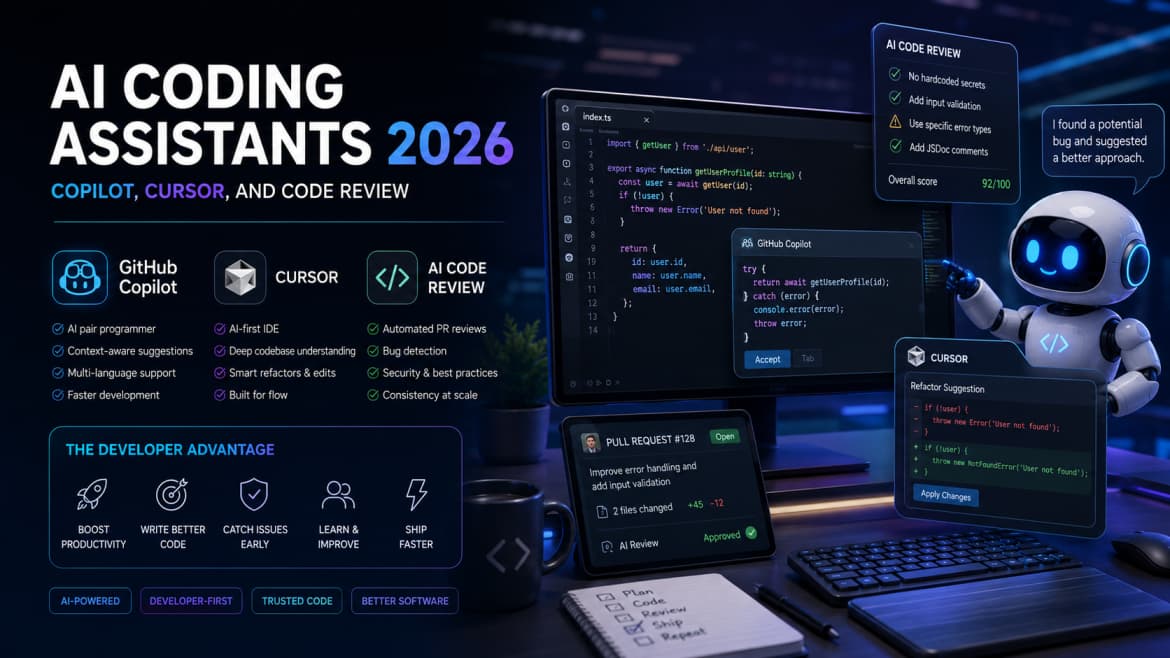
Developers adopted AI assistants faster than almost any other profession. Used well, they reduce boilerplate and documentation time; used carelessly, they inject subtle bugs and license risks.
Autocomplete vs chat agents
Inline completion excels at repetitive patterns. Chat panels handle refactors, explanations, and test generation across files. Combine both but keep version control commits small for easy rollback.
Repository context features
Some tools index entire repos for better suggestions. Exclude secrets via gitignore and environment files. Scan for accidental API key commits before enabling cloud indexing.
Security review habits
Treat generated code as untrusted input. Run static analysis, dependency scanners, and normal code review. AI may suggest outdated libraries with known vulnerabilities.
Testing discipline
Ask for tests alongside features, then run them. Models write plausible but failing assertions. Coverage tools highlight gaps better than hope.
Licensing and attribution
Generated code may resemble training data. Enterprises set policies on acceptable use. Document when major modules are AI-assisted for maintenance clarity.
Team workflows
Share prompt snippets for common tasks—migrations, API clients, logging. Standardize on approved tools to avoid scattered shadow accounts.
Summary
AI coding tools amplify skilled developers who still own architecture, security, and tests.