AI Agents in 2026: Autonomous Tools and the Road Ahead
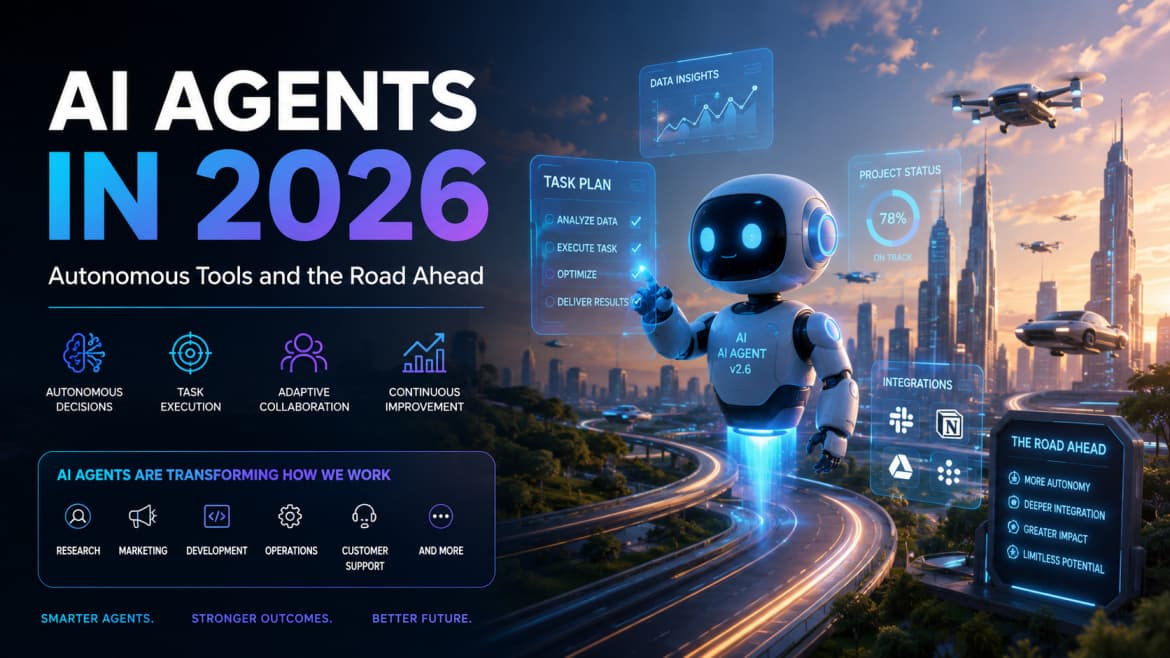
AI agents go beyond single prompts—they plan steps, call tools, browse websites, and update spreadsheets with varying degrees of supervision. Vendors market them as digital coworkers; reality sits between automation scripts and true independence.
What agents do today
Common demos include travel research, CRM updates, and ticket triage. Agents chain API calls, parse web pages, and draft emails for human approval. Fully unattended operation remains rare in regulated industries.
Tool use and connectors
Agents rely on connectors to email, calendars, databases, and code repos. Permission scopes should follow least privilege—read-only where possible, write access only with logging.
Failure modes
Loops, wrong button clicks, and hallucinated confirmations happen. Kill switches, spending limits, and sandbox environments reduce damage. Never grant banking credentials without multi-factor human approval.
Enterprise rollout patterns
Teams start with internal workflows—HR FAQs, IT password resets—before customer-facing bots. Observability dashboards track success rates and escalation paths to humans.
Consumer implications
Phone assistants may book reservations or summarize inboxes. Users should review confirmations and disable agents on shared devices.
Regulation and liability
Who is responsible when an agent makes a costly mistake? Contracts and terms of service evolve; businesses document human oversight requirements.
Looking ahead
Agents will improve as models reason longer and tools standardize. Expect hybrid workflows where agents draft and humans sign off for years to come.
Takeaway
Treat agents as powerful interns: specific tasks, clear limits, and mandatory review on outcomes that matter.