AI Ethics and Privacy 2026: What Users Should Know
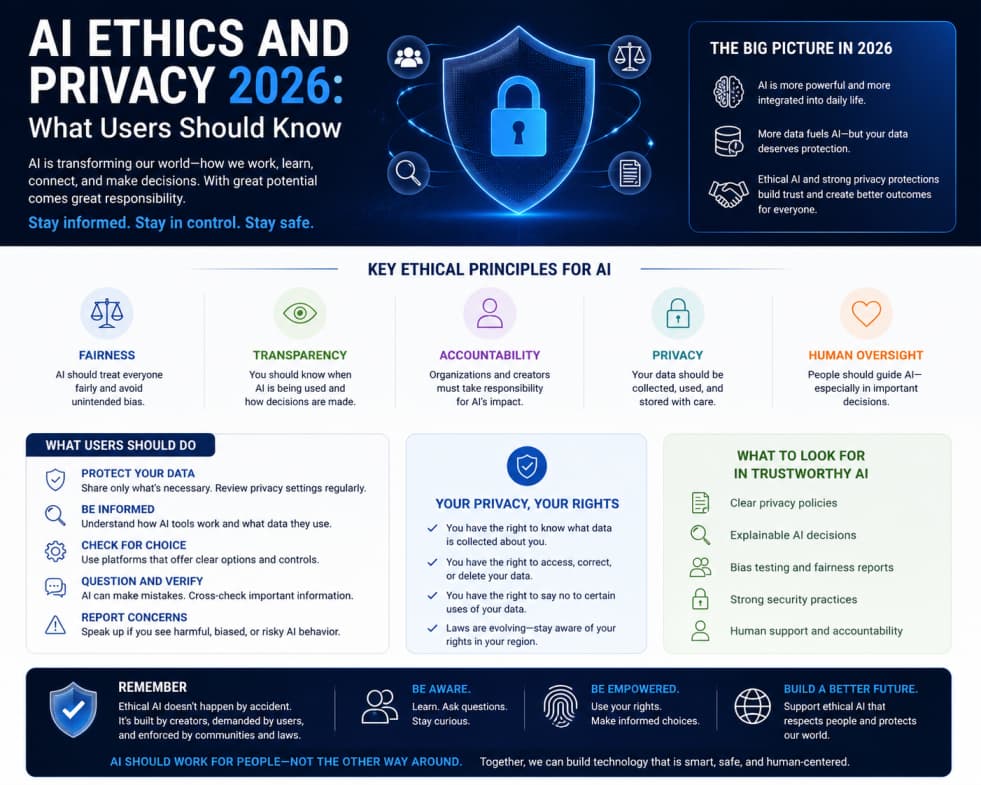
AI ethics is not only for philosophers—every user makes choices about what data to share, when to trust outputs, and how to respond to synthetic media. This guide translates big debates into daily habits.
Training data and consent
Models learn from public and licensed datasets. Artists and publishers continue legal disputes over copyrighted material. Users should assume chats on consumer tiers may inform product improvement unless opted out.
Bias and fairness
Systems can reflect stereotypes in hiring, lending, or healthcare suggestions if not audited. Question surprising recommendations and demand human review in high-stakes decisions.
Deepfakes and misinformation
Audio and video cloning improve yearly. Verify urgent requests for money or passwords through a second channel. Media outlets increasingly label synthetic content—look for disclosures.
Workplace policies
Employers may restrict uploading confidential documents to external AI. Read handbook updates and use approved enterprise tools with logging for compliance.
Children's data
Minors need extra protection; parental controls and age gates vary by app. Educate teens about sharing photos with AI portrait apps.
Personal action list
Use strong passwords, opt out of training where offered, label your own AI-assisted content honestly, and report abusive generated material on platforms.
Summary
Ethical AI use balances innovation with skepticism, transparency, and respect for others' rights.