Fabric Guide 2026: Cotton, Linen, Silk, and Blends
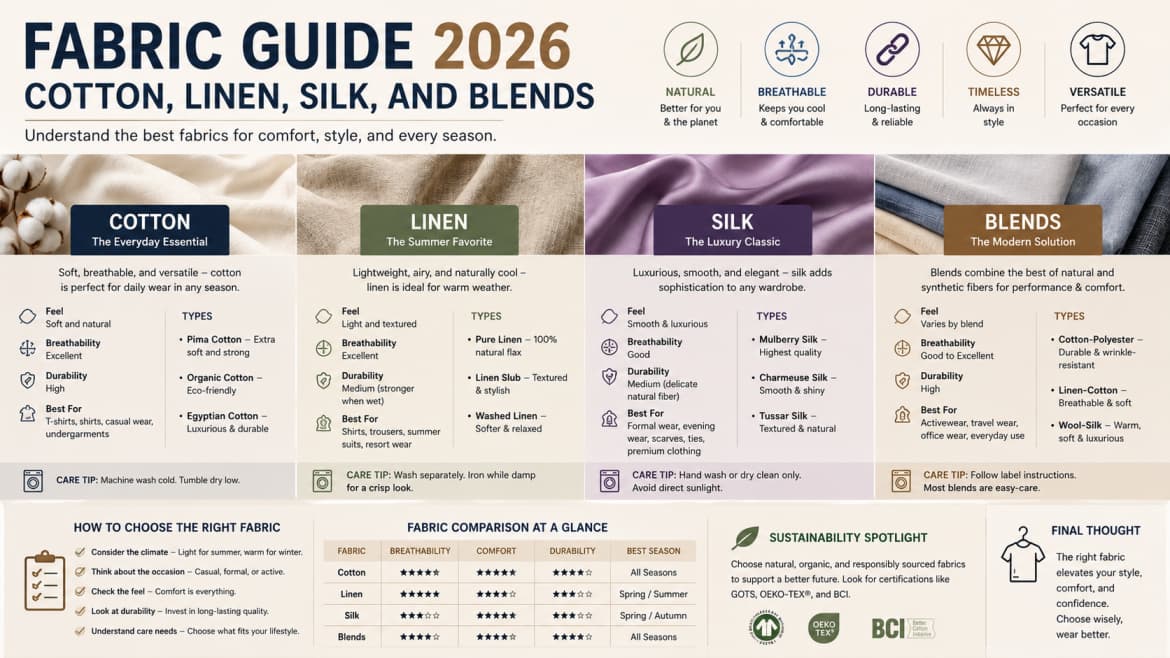
Fabric choice determines whether a garment feels luxurious or irritating after one wash. Labels list fiber content, but understanding how those fibers behave saves money and reduces closet disappointment.
Cotton: everyday workhorse
Breathable and easy to wash, cotton wrinkles and can shrink if dried hot. Long-staple cotton feels softer and lasts longer. Great for tees, shirts, and casual dresses in warm weather.
Linen: summer structure
Linen wrinkles naturally—that is part of its look. It dries quickly and stays cool. Blend linen with cotton for slightly less creasing. Iron damp or embrace relaxed texture.
Silk: drape and occasion wear
Silk regulates temperature and drapes beautifully but needs gentle care. Dry clean or hand wash depending on finish. Avoid deodorant stains by letting products dry before dressing.
Wool and cashmere
Excellent insulation with less bulk than synthetics. Merino wool suits travel and layering. Follow care guides to prevent shrinkage and moth damage in storage.
Synthetics and blends
Polyester adds durability and stretch but can trap heat. Blends balance cost and performance—read ratios. Higher natural fiber percentage usually improves comfort for daily wear.
How to shop smarter
Touch fabric in person when possible. Hold it to light for transparency. Check care tags before buying—if you will not dry clean, skip dry-clean-only silk for daily use.
Summary
Match fabric to climate, care habits, and how formal the piece must look. Fiber knowledge is as important as size on the label.