Power Bank Guide 2026: Fast Charging on the Go
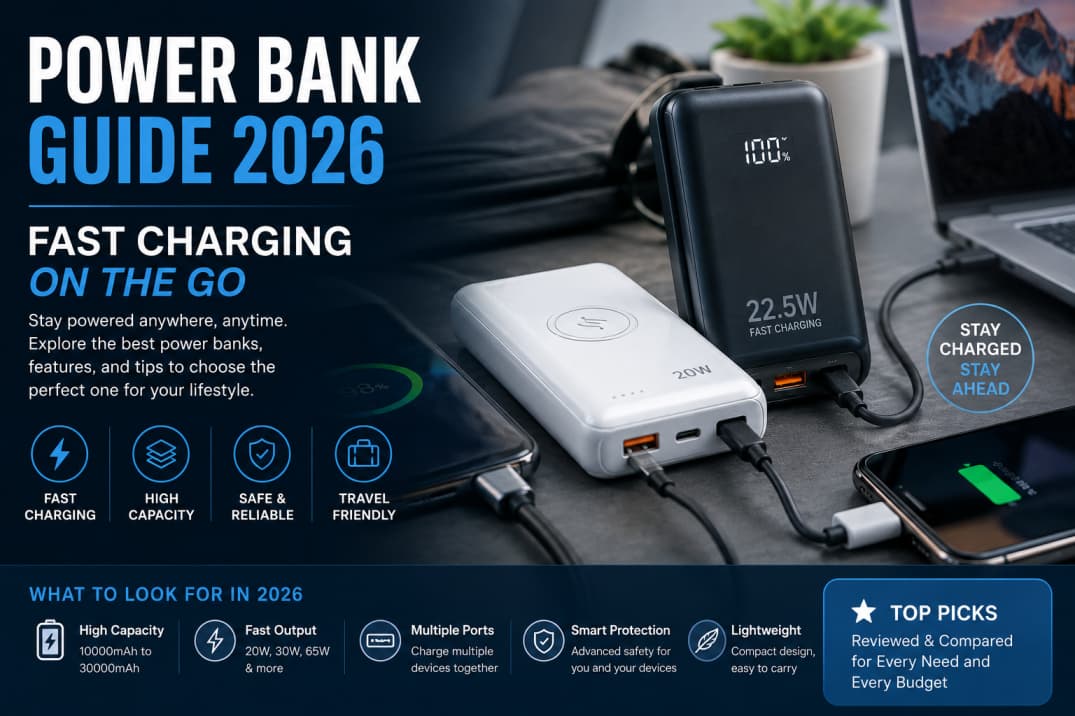
Running out of battery during travel is stressful. Modern power banks can fast-charge phones multiple times and even refill some laptops—if you understand capacity ratings and port wattage.
Capacity and real-world charges
Milliamp-hour ratings are marketing starting points. Expect roughly 60–70 percent usable energy after heat and conversion losses. A 10,000 mAh bank may deliver one to one and a half phone charges depending on phone battery size.
Wattage and charging protocols
USB-C Power Delivery matters for laptops and recent phones. Match bank wattage to device requirements—30W helps many ultrabooks; phones may need only 18–20W for fast charging. Cables must support the same rating.
Port count and pass-through
Multiple ports charge two devices but share total power. Pass-through lets you refill the bank while charging a phone overnight—convenient in hotel rooms with one outlet.
Size, weight, and airline limits
Larger banks suit week-long trips but weigh more. Airlines restrict lithium batteries in carry-on; check current limits for capacity in watt-hours, usually printed on the bank.
Safety and certification
Buy from known brands with overcharge protection. Avoid damaged swollen batteries. Recycle old banks at e-waste centers.
Use tips
Charge the bank fully before flights. Keep one short cable per device type. Label banks if your household shares gear.
Takeaway
Match wattage to your largest device, buy slightly more capacity than you think you need, and keep cables airline-ready.