AI Image Generators 2026: Midjourney, DALL-E, and Alternatives
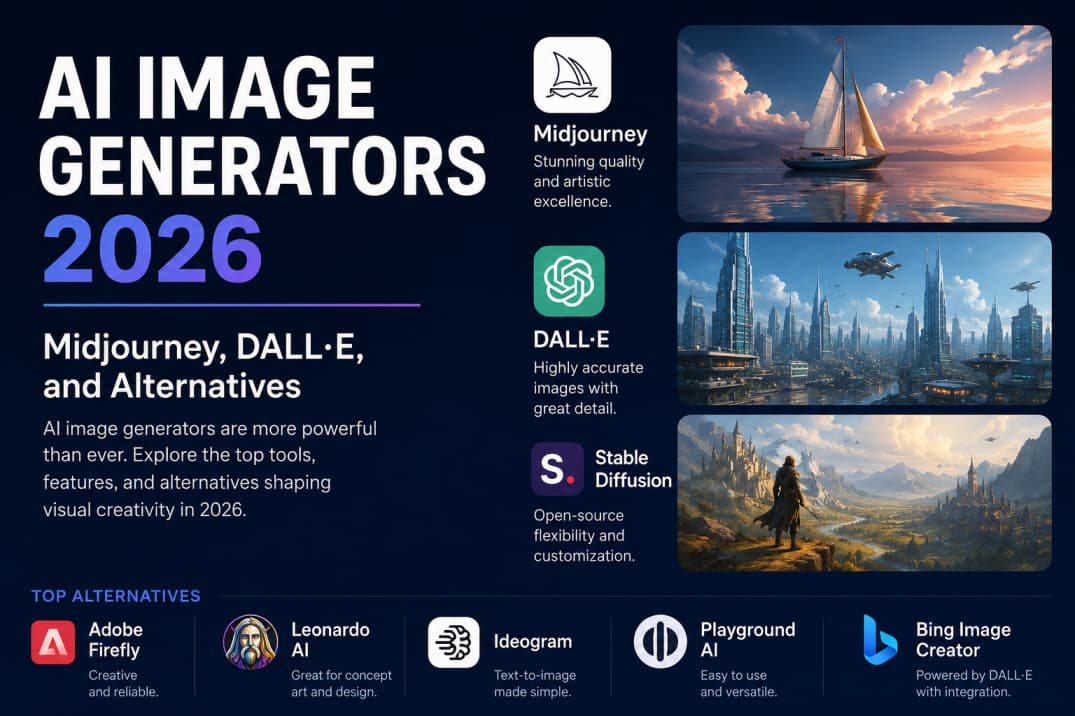
AI image tools matured from novelty to production assistants, but legal, ethical, and quality questions remain. Creators should understand licensing, disclosure expectations, and when human photography still wins.
Quality and control
Leading services offer style presets, inpainting, and aspect ratio controls. Photorealistic outputs improved, yet hands, text, and fine details may still fail—plan retouching time.
Commercial licensing
Terms differ on whether you own outputs, can sell prints, or must credit the platform. Enterprise agreements clarify indemnification; free tiers may restrict commercial use. Read current policies before client work.
Stable Diffusion and local generation
Open models run on powerful PCs for users who want offline control and custom training. Setup complexity is higher, but artists can fine-tune LoRA models for brand-consistent looks.
Disclosure and ethics
Many publishers require labeling AI-generated visuals. Avoid mimicking living artists' styles without permission. Do not create deceptive impersonation imagery.
Workflow integration
Start with rough prompts, iterate variations, then refine in Photoshop or Figma. Use AI for mood boards and drafts, not always final deliverables.
Hardware needs
Cloud services offload GPU requirements. Local generation needs VRAM headroom and cooling—check recommended specs before building a machine.
Summary
Pick tools based on license, style fit, and editing time. Combine AI speed with human art direction for professional results.