Smartphone Camera Guide 2026: Sensors and Lenses
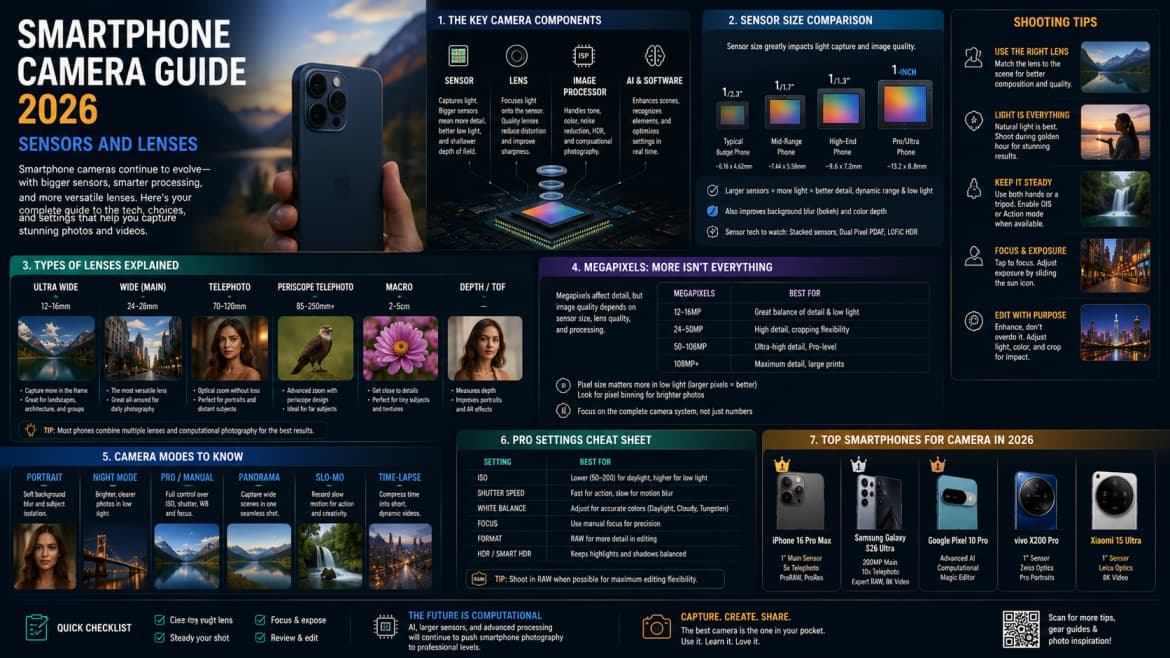
Smartphone cameras improve every year, but marketing still leans on megapixel counts while real-world quality depends on sensor size, lens design, and image processing. This guide helps you evaluate phones using the photos you actually take.
Main sensor vs ultrawide vs telephoto
The main camera handles most daylight and indoor shots. An ultrawide lens helps architecture and group photos but often struggles in low light. Telephoto lenses improve portraits and zoom; compare optical zoom levels rather than digital zoom numbers that crop and soften detail.
Low light and night modes
Larger sensors gather more light, reducing noise in restaurants and evening streets. Night modes stack multiple exposures—results vary by brand. Read sample galleries shot at dusk, not only bright daylight hero images on product pages.
Video features that matter
Stabilization, microphone quality, and 4K frame rates affect creators more than still shooters. Log profiles and external mic support matter if you film talking-head content or travel vlogs regularly.
Computational photography trade-offs
HDR and portrait processing can look natural or over-smoothed. Skin tones and sky color are common differences between brands. If you edit photos manually, check whether the phone shoots RAW or ProRAW equivalents for more control.
What to ignore in spec sheets
Extreme megapixel counts on secondary sensors rarely beat a solid main lens. AI scene labels do not replace optical quality. Marketing terms for zoom should be verified against optical magnification.
How to compare before you buy
Watch review samples at 100% zoom, check skin tones in portraits, and test shutter lag if you photograph kids or pets. Store demos help, but pre-installed demo modes can flatter results—bring your own SD card or cloud account when possible.
Summary
Buy for the lens you will use daily, sensor performance in low light, and video tools if you record often. Megapixels are only one variable in a much larger equation.