Sustainable Fashion 2026: How to Shop More Responsibly
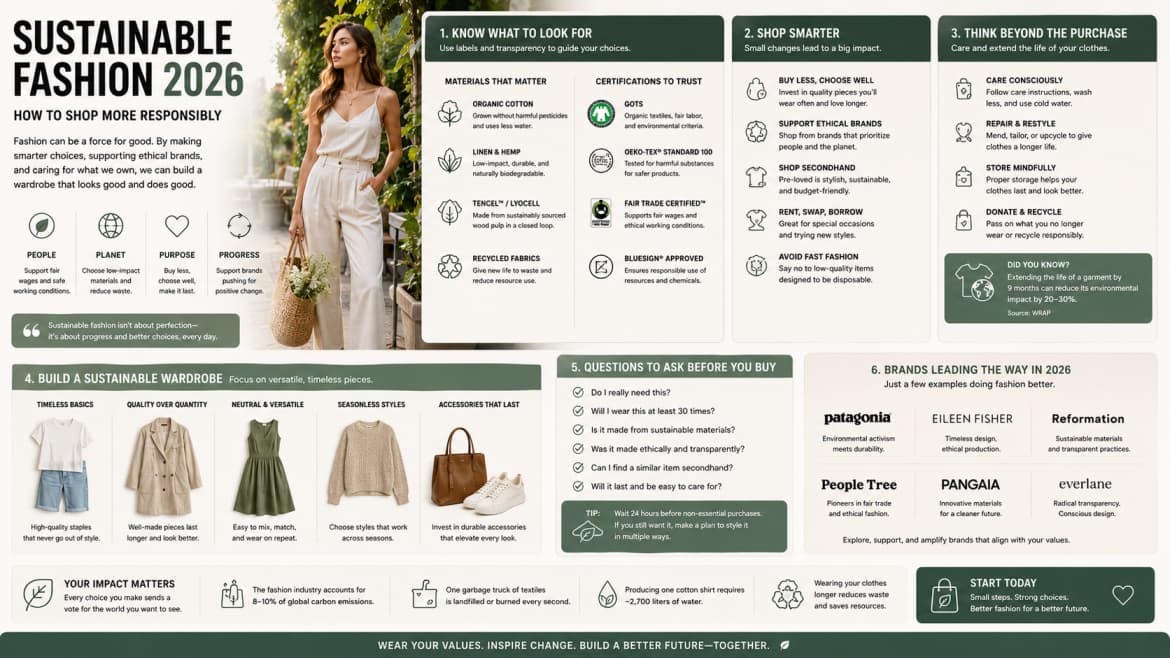
Sustainability in fashion is often marketed as a single eco-friendly collection, but real progress combines fewer purchases, better materials, and longer garment life. This guide focuses on decisions you can make at any budget.
Fabrics that last and biodegrade faster
Organic cotton, linen, hemp, and wool generally outperform cheap synthetics in breathability and durability. Recycled polyester helps divert waste but still sheds microfibers—use a washing bag for synthetics and air dry when possible.
Read labels beyond buzzwords
Look for specific standards such as GOTS for organic textiles or Bluesign for chemical management. Vague green labels without third-party proof deserve skepticism. Transparency pages listing factories and wages are stronger signals than leaf icons alone.
Buy secondhand strategically
Thrift and resale platforms extend product life and lower cost. Prioritize structured items—coats, leather goods, denim—where quality is visible. Skip secondhand basics if sizing is inconsistent and you will not tailor.
Care habits that matter most
Washing cold, skipping the dryer, and repairing small seams reduce environmental impact more than buying one extra organic tee each month. Learn basic needle and button fixes or support local tailors.
Building a slower closet
Set an annual clothing budget and track cost per wear. Pieces worn thirty times are usually better investments than trend items worn twice, even if the sticker price is higher.
When new purchases make sense
Support brands investing in repair programs and take-back schemes. One well-made coat you wear five winters beats five disposable jackets.
Bottom line
Sustainable style is mostly restraint plus maintenance. Shop your closet first, then upgrade the categories you wear every week.