The Importance of Time Management for Personal Success
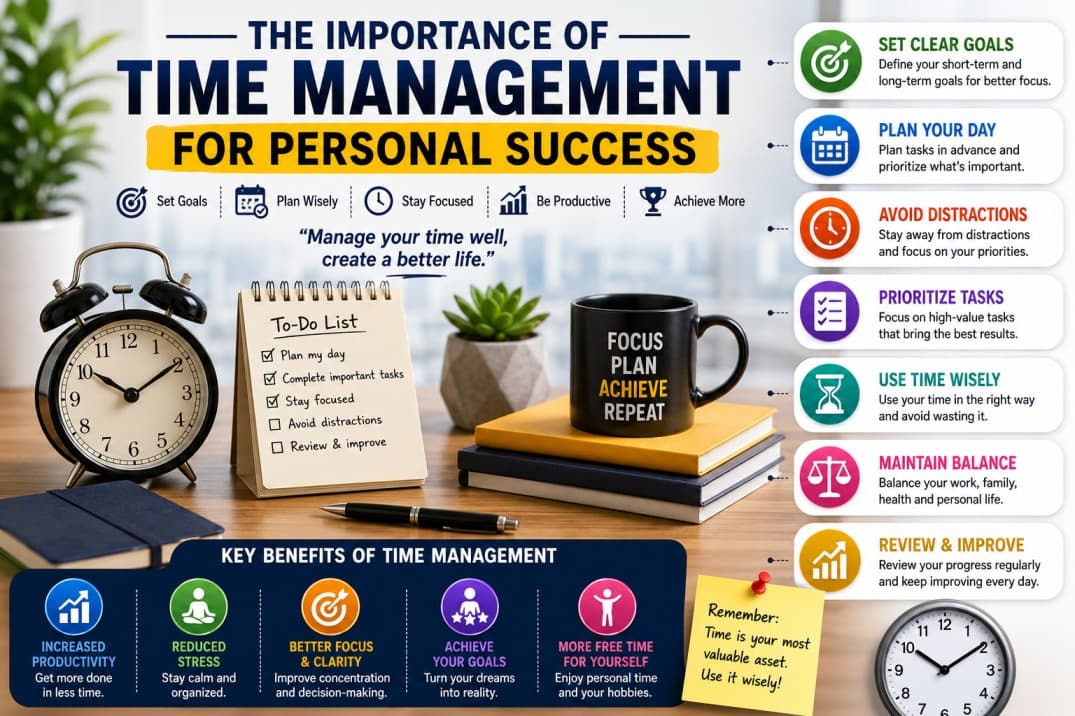
Time management is one of the most valuable skills for achieving success in both personal and professional life. In today’s fast-moving world, many people struggle with busy schedules, distractions, stress, and increasing responsibilities. Managing time effectively helps individuals stay organised, productive, and focused on important goals.
Successful people understand the importance of planning daily activities, avoiding unnecessary distractions, and using time wisely. Good time management not only improves productivity but also reduces stress and creates better work-life balance.
In 2026, digital technology, productivity tools, and smart planning methods are helping people manage time more efficiently than ever before.
Why Time Management is Important
Time is one of the few resources that cannot be replaced once lost. Effective time management allows people to complete tasks efficiently while maintaining personal balance and mental wellness.
Benefits of good time management include:
Increased productivity Reduced stress Better focus Improved discipline More free time Better work-life balance
People who manage time effectively often feel more confident and motivated in daily life.
Time management also helps individuals avoid unnecessary pressure and last-minute work.
Setting Clear Goals
Goal setting is an essential part of effective time management.
People should create:
Short-term goals Long-term goals Daily task lists Weekly priorities Benefits of Goal Planning
Clear goals help people:
Stay focused Improve motivation Track progress Manage responsibilities better
Writing goals and creating schedules improves organisation and increases productivity.
People who set realistic goals often achieve better results over time.
Planning Daily Activities
Daily planning helps people organise tasks based on importance and deadlines.
Effective Daily Planning Tips
Useful planning habits include:
Creating to-do lists Prioritising important tasks Setting deadlines Breaking large tasks into smaller steps
Planning the day in advance reduces confusion and improves efficiency.
Many successful individuals start their mornings by reviewing daily schedules and priorities.
Consistency in planning creates stronger discipline and productivity habits.
Avoiding Distractions
Modern technology and social media often create distractions that reduce productivity.
Common distractions include:
Excessive mobile phone use Social media scrolling Unnecessary multitasking Poor workspace organisation Tips to Stay Focused
People can improve concentration by:
Turning off unnecessary notifications Creating quiet work environments Setting focused work periods Taking planned breaks
Reducing distractions helps improve mental focus and task completion speed.
Self-discipline plays an important role in successful time management.
Importance of Prioritization
Not all tasks are equally important. Prioritising work helps people focus on high-value activities first.
Benefits of Prioritization
Task prioritisation helps:
Improve productivity Reduce stress Complete important work faster Avoid wasting time
People often use productivity methods such as:
Priority lists Time-blocking Productivity planners
Effective prioritisation allows better use of time and energy throughout the day.
Time Management for Students
Students benefit greatly from good time management skills.
Benefits for Students
Time management helps students:
Improve study habits Complete assignments on time Reduce exam stress Balance studies and personal life
Students who follow organised schedules often perform better academically.
Study planning and regular revision improve learning efficiency and confidence.
Digital educational tools and study apps also help students manage time more effectively.
Time Management in Professional Life
Time management is essential in workplaces and business environments.
Workplace Benefits
Good time management helps professionals:
Meet deadlines Improve work quality Increase productivity Reduce workplace stress Improve career growth
Professionals who manage time effectively often gain better opportunities and stronger performance results.
Businesses also encourage productivity systems to improve employee efficiency and teamwork.
Mental Health and Time Management
Poor time management can increase stress, anxiety, and emotional pressure.
Benefits for Mental Wellness
Good time management supports:
Better emotional balance Reduced stress Improved sleep quality Better work-life balance
People who maintain organised routines often experience better mental clarity and emotional stability.
Taking breaks, exercising, and maintaining healthy habits are also important for productivity and mental health.
Balanced routines improve both performance and overall wellness.
Technology and Productivity Tools
Modern technology offers many tools for managing time efficiently.
Popular productivity tools include:
Calendar apps Task management software Reminder applications Online planners Focus timers Benefits of Digital Productivity Tools
Technology helps people:
Organise schedules Track deadlines Improve task management Increase efficiency
Artificial Intelligence tools are also helping automate tasks and improve productivity planning.
Technology continues making time management easier and more effective.
Future Trends in Productivity and Time Management
Time management methods continue evolving with technology and modern lifestyles.
Popular trends in 2026 include:
AI-Powered Productivity Systems
Artificial Intelligence helps create personalised schedules and productivity suggestions.
Remote Work Management
Remote professionals use digital systems to manage tasks and communication effectively.
Smart Work-Life Balance Strategies
People increasingly focus on balancing productivity with mental health and personal wellness.
Automation and Task Management
Automation tools reduce repetitive work and improve efficiency.
The future of productivity will become more technology-driven and personalised.
Conclusion
Time management is an essential skill for achieving personal success, improving productivity, and maintaining a balanced lifestyle. Planning tasks, avoiding distractions, setting goals, and using productivity tools all contribute to better time management.
In today’s busy world, learning how to use time wisely is more important than ever before. Small daily improvements in organisation and discipline can create major long-term benefits.
As technology continues evolving in 2026, effective time management will remain one of the most valuable skills for personal growth and success.