The Benefits of Meditation and Mindfulness for Daily Life
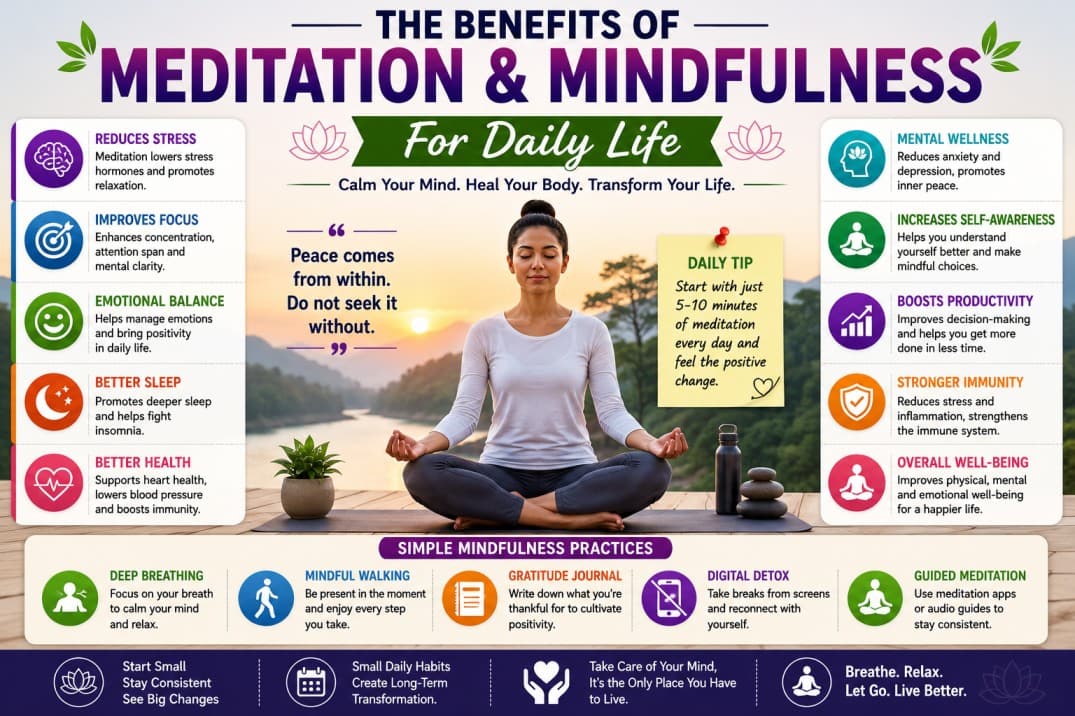
Meditation and mindfulness have become increasingly popular in modern lifestyles as people search for ways to reduce stress, improve mental health, and create inner balance. In today’s fast-moving digital world, many individuals face anxiety, distractions, emotional pressure, and mental exhaustion caused by busy routines and constant technology usage.
Practicing meditation and mindfulness helps calm the mind, improve concentration, and support emotional well-being. These practices are no longer limited to spiritual traditions; they are now widely used in schools, workplaces, healthcare systems, and personal wellness routines worldwide.
In 2026, more people are focusing on mental wellness and self-care, making meditation an important part of healthy daily living.
What is Meditation and Mindfulness?
Meditation is a mental practice that helps individuals relax, focus attention, and achieve mental clarity through breathing techniques and awareness exercises.
Mindfulness refers to staying fully present and aware of thoughts, emotions, and surroundings without unnecessary stress or judgment.
Popular mindfulness activities include:
Deep breathing exercises Guided meditation Yoga Silent reflection Gratitude journaling Mindful walking
These practices help improve both emotional and physical wellness naturally.
Benefits of Meditation for Mental Health
Meditation provides several mental health benefits that support emotional stability and inner peace.
Stress Reduction
One of the biggest benefits of meditation is reducing stress and anxiety.
Meditation helps:
Relax the mind Reduce negative thoughts Improve emotional control Lower mental pressure
People who meditate regularly often feel calmer and more emotionally balanced.
Improved Focus and Concentration
Mindfulness practices help improve attention and mental clarity.
Benefits include:
Better concentration Improved memory Faster decision-making Increased productivity
Students and professionals often use meditation to improve focus during work and studies.
Better Emotional Balance
Meditation encourages self-awareness and emotional understanding.
People practicing mindfulness often manage emotions more effectively during stressful situations.
Mental wellness is becoming increasingly important in today’s modern lifestyle.
Physical Health Benefits of Meditation
Meditation also supports physical health and body wellness.
Better Sleep Quality
Meditation relaxes the nervous system and helps improve sleep patterns naturally.
Benefits include:
Faster sleep Better relaxation Reduced insomnia Improved recovery
People with stressful routines often experience better rest through mindfulness practices.
Improved Heart Health
Relaxation exercises may help lower stress-related health problems and improve heart wellness.
Meditation can support:
Better blood pressure control Reduced stress hormones Improved breathing patterns
Healthy mental habits positively affect overall body performance.
Increased Energy Levels
Mindfulness helps reduce mental exhaustion and improve emotional energy.
People often feel refreshed and motivated after meditation sessions.
Meditation and Productivity
Meditation can improve productivity and daily performance significantly.
Workplace Benefits
Professionals practicing mindfulness often experience:
Better concentration Reduced workplace stress Improved creativity Better communication
Many companies now encourage mindfulness programs to improve employee wellness and productivity.
Student Benefits
Students benefit from meditation through:
Improved study focus Better exam preparation Reduced academic stress Improved learning ability
Mental clarity and calmness support stronger educational performance.
Different Types of Meditation
There are several meditation techniques suitable for different lifestyles and preferences.
Popular meditation methods include:
Guided Meditation
People follow audio instructions or meditation apps for relaxation and focus.
Breathing Meditation
This technique focuses on slow breathing and calming the mind.
Yoga and Mindfulness
Yoga combines physical movement with mental relaxation and breathing exercises.
Gratitude Meditation
People focus on positive thoughts and appreciation for life experiences.
Different meditation styles help individuals find methods that match their personal comfort and goals.
Building Healthy Mindfulness Habits
Creating regular mindfulness habits improves long-term mental wellness.
Simple Daily Mindfulness Tips
People can practice mindfulness by:
Taking deep breaths regularly Reducing mobile distractions Spending time in nature Practicing gratitude Taking short mental breaks
Even a few minutes of mindfulness daily can improve emotional balance significantly.
Consistency is more important than long meditation sessions.
Technology and Meditation Apps
Technology is helping more people access mindfulness and meditation practices easily.
Popular digital wellness tools include:
Meditation apps Sleep tracking apps Relaxation music platforms AI-based wellness systems Benefits of Meditation Apps
Digital platforms help users:
Learn meditation techniques Track wellness progress Build healthy habits Reduce stress conveniently
Online meditation classes and wellness communities are also becoming increasingly popular worldwide.
Technology is making mental wellness more accessible and practical.
Challenges of Maintaining Mindfulness
Many people struggle to maintain mindfulness because of busy schedules and distractions.
Common challenges include:
Lack of time Overthinking Digital distractions Inconsistent routines Tips for Staying Consistent
People can improve consistency by:
Setting fixed meditation times Starting with short sessions Creating quiet spaces Using guided meditation tools
Building mindfulness habits gradually creates stronger long-term results.
Patience and consistency are important for successful meditation practices.
Future Trends in Wellness and Mindfulness
Mental wellness trends continue growing rapidly worldwide.
Popular trends in 2026 include:
AI-Based Mental Wellness Tools
Artificial Intelligence is helping create personalised mindfulness experiences.
Corporate Wellness Programs
Companies increasingly support employee mental health and stress management.
Virtual Meditation Experiences
Virtual Reality meditation environments are becoming more advanced.
Digital Detox Practices
People are focusing more on reducing screen time and improving mental balance.
The future of mindfulness will continue combining wellness practices with modern technology.
Conclusion
Meditation and mindfulness provide powerful benefits for mental, emotional, and physical well-being. These practices help reduce stress, improve focus, support emotional balance, and create healthier lifestyles.
In today’s busy world, maintaining mental wellness is becoming just as important as physical health. Simple mindfulness habits can create positive long-term improvements in both personal and professional life.
As awareness about mental health continues growing in 2026, meditation and mindfulness will remain important tools for achieving balance, peace, and overall wellness.