The Growth of Freelancing and Remote Work in 2026
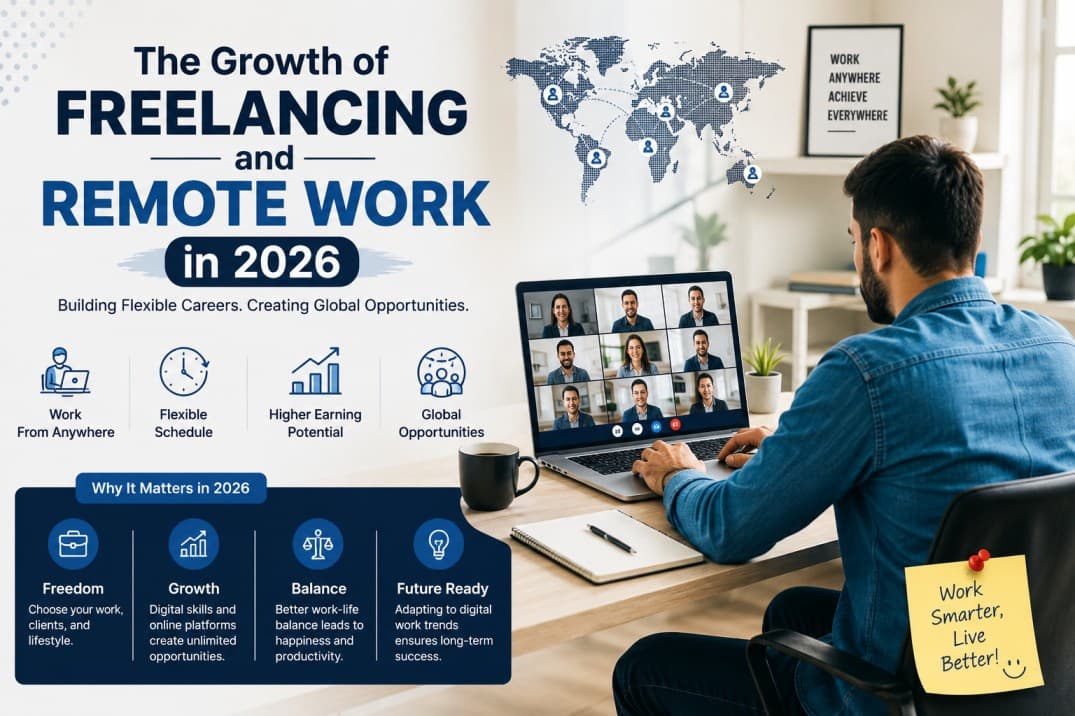
Freelancing and remote work have become major trends in the modern professional world. Advances in internet technology, digital communication tools, and global online platforms are allowing people to work from anywhere more efficiently than ever before. In recent years, many professionals and businesses have shifted from traditional office environments to flexible remote working systems.
Freelancing provides individuals with opportunities to work independently, choose projects, and build careers without depending entirely on traditional full-time jobs. Remote work also offers businesses greater flexibility while helping employees improve work-life balance and productivity.
In 2026, digital careers, online businesses, and flexible work environments continue growing rapidly across industries worldwide.
What is Freelancing and Remote Work?
Freelancing refers to independent work where professionals provide services to clients on a project or contract basis instead of working permanently for one company.
Remote work means employees or freelancers perform their jobs from locations outside traditional offices using digital tools and internet connectivity.
Popular freelancing and remote work fields include:
Graphic design Web development Digital marketing Content writing Video editing Virtual assistance Online teaching
Technology has made remote collaboration and digital communication easier and more effective.
Benefits of Freelancing
Freelancing offers several advantages for modern professionals.
Flexible Work Schedule
Freelancers can often choose their own working hours and manage projects according to personal schedules.
Flexible working allows people to:
Maintain work-life balance Reduce travel stress Work comfortably from home Manage personal responsibilities more effectively
This flexibility attracts many people seeking more independence and freedom in their careers.
Multiple Income Opportunities
Freelancers can work with multiple clients and create different income sources.
Benefits include:
Higher earning potential Diverse work experience Skill improvement Financial flexibility
Many professionals use freelancing to build side income or full-time digital careers.
Global Client Access
Online platforms allow freelancers to connect with clients worldwide.
People can work internationally without relocating physically, increasing career opportunities significantly.
Digital marketplaces continue expanding opportunities for remote professionals globally.
Advantages of Remote Work for Businesses
Companies are increasingly adopting remote work systems for better efficiency and flexibility.
Reduced Operational Costs
Businesses can reduce expenses related to:
Office space Utilities Transportation support Physical infrastructure
Remote systems help companies operate more cost-effectively.
Improved Employee Productivity
Many employees perform better in flexible and comfortable work environments.
Benefits include:
Better focus Reduced commuting stress Increased job satisfaction Improved mental wellness
Businesses using remote work strategies often experience improved employee retention and performance.
Access to Global Talent
Remote work allows companies to hire skilled professionals from different countries and regions.
This helps businesses build stronger and more diverse teams.
Technology Supporting Remote Work
Modern technology is essential for successful freelancing and remote collaboration.
Popular remote work tools include:
Video conferencing platforms Cloud storage systems Project management software Communication apps Online payment platforms AI and Productivity Tools
Artificial Intelligence helps automate repetitive tasks and improve workflow efficiency.
AI tools support:
Scheduling Content creation Customer support Productivity tracking
Technology continues improving digital work environments worldwide.
Work-Life Balance and Mental Health
Freelancing and remote work can positively affect personal wellness when managed properly.
Benefits of Flexible Work
Remote professionals often experience:
More family time Reduced travel fatigue Better schedule flexibility Improved comfort Importance of Healthy Routines
Maintaining healthy work habits is important for remote workers.
Useful habits include:
Creating work schedules Taking regular breaks Exercising daily Avoiding overworking
Balanced routines improve both productivity and mental health.
Challenges of Freelancing and Remote Work
Despite many advantages, freelancing and remote work also present challenges.
Common challenges include:
Income instability Isolation and loneliness Time management difficulties Communication issues Work distractions at home Importance of Self-Discipline
Successful remote workers must maintain:
Strong time management Consistent communication Professional organisation Self-motivation
Building discipline and productivity habits is important for long-term success.
Building Skills for Digital Careers
Continuous learning is essential for freelancers and remote professionals.
Important skills include:
Communication skills Technical skills Time management Problem-solving Digital literacy Online Learning Opportunities
People can improve skills using:
Online courses Digital certifications Video tutorials Professional workshops
Skill development helps freelancers remain competitive in the growing digital economy.
Learning modern tools and technologies increases career opportunities significantly.
Future Trends in Remote Work
The future of work continues evolving rapidly through digital transformation and technology.
Important trends in 2026 include:
Hybrid Work Models
Many companies now combine office work with remote flexibility.
AI-Based Work Automation
Artificial Intelligence continues automating repetitive business tasks.
Digital Nomad Lifestyle
More professionals are traveling while working remotely from different locations worldwide.
Virtual Collaboration Technologies
Advanced virtual communication systems are improving online teamwork experiences.
The future workplace will become more flexible, technology-driven, and globally connected.
Financial Management for Freelancers
Freelancers must manage income and expenses carefully.
Important financial habits include:
Budget planning Emergency savings Tax management Income tracking Benefits of Financial Planning
Good financial management helps freelancers:
Reduce financial stress Maintain income stability Plan long-term goals Build stronger financial security
Smart financial habits are important for sustainable freelancing careers.
Conclusion
Freelancing and remote work are transforming the future of careers and modern workplaces. Flexible schedules, global opportunities, digital technology, and independent work systems are creating new possibilities for professionals worldwide.
Although remote work has challenges, its benefits continue attracting businesses and workers globally. As technology advances in 2026, freelancing and digital careers will continue becoming more popular and accessible.
The future of work is increasingly flexible, digital, and connected through innovation and global collaboration.