The Benefits of Online Learning and Digital Education
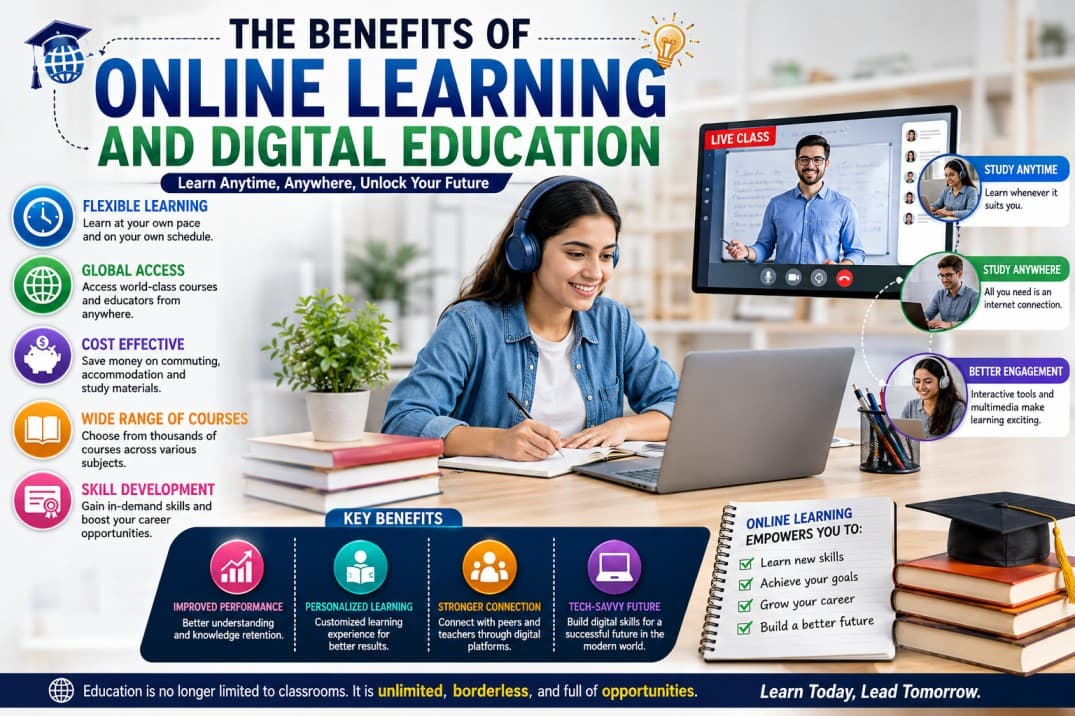
Online learning and digital education have transformed the way people study, learn new skills, and access educational resources worldwide. With the rapid growth of internet technology, smartphones, and digital platforms, education is becoming more flexible, accessible, and convenient than ever before.
Students, professionals, and learners of all ages now use online courses, virtual classrooms, and educational applications to improve knowledge and career opportunities. Digital education allows people to learn from anywhere without depending entirely on traditional classroom systems.
In 2026, online learning continues growing rapidly as technology improves educational experiences through Artificial Intelligence, virtual learning platforms, and personalised study systems.
What is Online Learning?
Online learning refers to education and training delivered through internet-based platforms and digital technologies.
Popular forms of online education include:
Virtual classrooms Online courses Educational mobile apps Video tutorials Live webinars Digital certifications
Students can access educational content using computers, tablets, and smartphones from almost any location.
Digital education platforms provide flexibility and convenience for both students and teachers.
Benefits of Online Learning
Online education provides several advantages for modern learners.
Flexible Learning Schedule
Students can learn at their own pace and choose study times based on personal schedules.
This flexibility is especially useful for:
Working professionals College students Freelancers Remote learners
Flexible learning helps people balance education with work and personal responsibilities.
Access to Global Education
Online learning allows students to access courses and teachers from around the world.
People can study from international universities and educational platforms without traveling abroad.
This improves learning opportunities and skill development globally.
Cost-Effective Education
Digital learning is often more affordable than traditional classroom education.
Students can save money on:
Transportation Accommodation Printed materials Campus expenses
Many platforms also provide free educational resources and affordable certification programs.
Technology in Modern Education
Technology plays a major role in improving digital learning experiences.
Modern educational technologies include:
Artificial Intelligence Virtual Reality Interactive learning apps Cloud-based classrooms Smart learning systems AI-Powered Learning Platforms
Artificial Intelligence helps create personalised learning experiences based on student performance and learning styles.
AI systems can:
Recommend study materials Analyse learning progress Automate assessments Provide instant feedback Virtual Classrooms
Video conferencing platforms allow students and teachers to interact remotely in real time.
Virtual learning supports communication, collaboration, and digital engagement effectively.
Technology continues making education more interactive and efficient.
Online Learning for Skill Development
Many people use online education to develop professional and technical skills.
Popular online learning subjects include:
Programming Graphic design Digital marketing Business management Language learning Data analysis Career Benefits of Online Learning
Digital education helps people:
Improve job opportunities Learn modern skills Build professional knowledge Increase productivity Support career growth
Online certifications are increasingly recognised by employers worldwide.
Continuous learning has become important in the modern digital economy.
Advantages for Students
Online education provides several benefits specifically for students.
Comfortable Learning Environment
Students can study from home in comfortable and personalised environments.
Better Learning Resources
Digital platforms provide:
Recorded lectures Interactive quizzes Downloadable notes Practice assignments Video explanations Improved Accessibility
Students in remote areas can access quality education through internet-based learning systems.
Digital education helps reduce geographical barriers in learning opportunities.
Online learning is helping make education more inclusive and accessible globally.
Challenges of Online Learning
Despite its advantages, online education also has challenges.
Common challenges include:
Internet connectivity issues Screen fatigue Lack of face-to-face interaction Distractions at home Self-discipline difficulties Importance of Time Management
Successful online learning requires:
Proper study schedules Self-motivation Good concentration Consistent practice
Students must develop strong discipline and focus for effective digital learning.
Educational institutions are also improving online systems to solve these challenges.
Mental Health and Digital Education
Online learning can affect mental health positively and negatively depending on study habits and workload.
Positive Effects
Digital education can:
Reduce travel stress Increase learning flexibility Improve comfort and convenience Importance of Balance
Students should maintain healthy routines by:
Taking regular breaks Exercising daily Managing screen time Maintaining social interaction
Balanced study habits help improve focus, motivation, and emotional well-being.
Mental wellness remains important for successful learning experiences.
Future Trends in Online Education
Digital education continues evolving rapidly through modern technology and innovation.
Important future trends include:
AI-Based Personalised Learning
Artificial Intelligence will continue improving customised education experiences.
Virtual Reality Learning
VR technology may create immersive classrooms and practical training simulations.
Gamified Education
Educational games and interactive systems are making learning more engaging for students.
Mobile Learning Growth
More people are using smartphones and mobile apps for education and skill development.
Global Digital Classrooms
International online collaboration between students and teachers is expected to increase significantly.
The future of education will become more technology-driven and accessible worldwide.
Importance of Lifelong Learning
In today’s fast-changing world, continuous learning is essential for personal and professional growth.
People who continue learning can:
Adapt to industry changes Improve career opportunities Develop modern skills Increase confidence
Online education provides flexible opportunities for lifelong learning and self-improvement.
Learning new skills regularly is becoming increasingly important in the digital era.
Conclusion
Online learning and digital education are transforming the future of global education. Flexible schedules, affordable learning opportunities, modern technology, and worldwide accessibility are making education more convenient and effective than ever before.
Although digital education has some challenges, its benefits continue driving rapid growth worldwide. As technology advances in 2026, online learning will become even more interactive, personalised, and accessible for learners everywhere.
Continuous education and skill development will remain essential for success in the modern digital world.