Handbag Buying Guide 2026: Size, Shape, and Daily Use
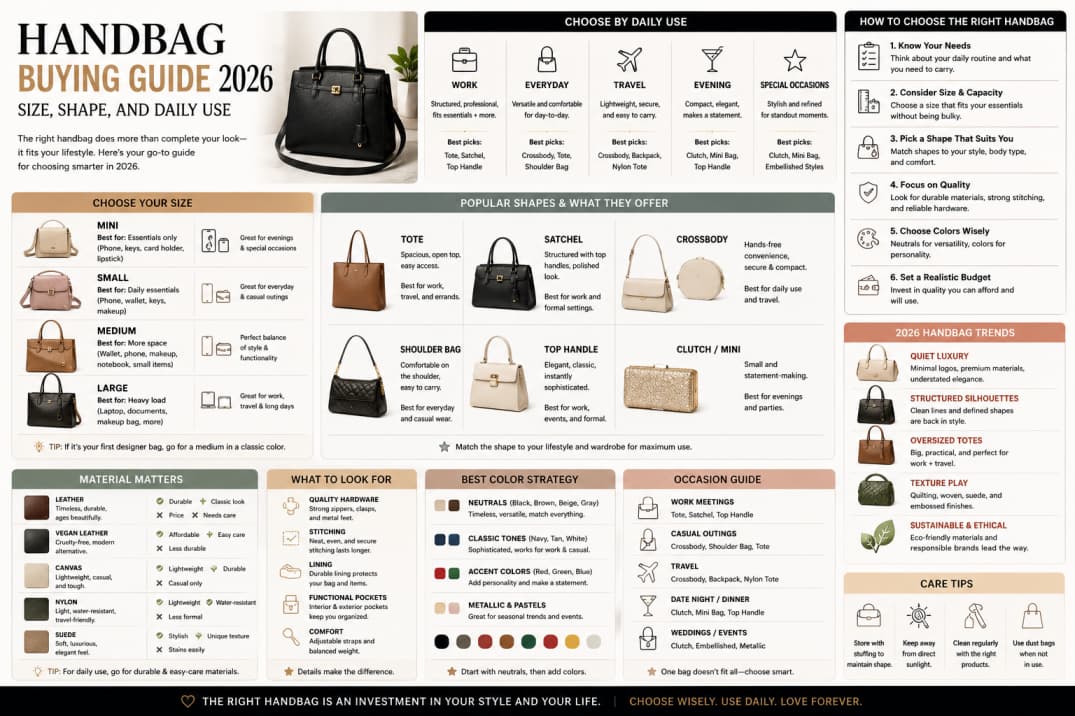
Handbags are functional first. A beautiful bag that cannot fit your laptop, wallet, and essentials will sit unused while a mid-priced structured tote becomes your daily workhorse.
Audit what you carry daily
Lay out phone, keys, wallet, makeup pouch, headphones, and anything else you always bring. Measure the largest item. Your bag should fit those items without stretching seams or losing shape within a month.
Tote vs crossbody vs shoulder
Totes suit commuters and parents who need open space. Crossbodies distribute weight and improve security in travel. Shoulder bags balance polish and capacity for offices. Consider one of each only if each serves a distinct scenario.
Material and hardware quality
Full-grain leather develops patina; pebbled leather hides scratches. Check stitching density, zipper brands, and feet on the base. Magnetic closures are convenient but weak magnets frustrate—test in store.
Strap length and ergonomics
Adjustable straps help cross-body wear. Wide straps reduce shoulder pain. If you carry heavy items, prioritize structured bags with reinforced handles.
Color strategy
Neutral bags—black, tan, navy—match most wardrobes. One seasonal color bag is enough for variety without cluttering closet shelves.
Care and resale value
Store stuffed with paper to hold shape, use leather conditioner seasonally, and keep dust bags. Classic shapes retain resale value better than logo-heavy trend pieces.
Summary
Buy for carry needs and comfort first, aesthetics second. One excellent daily bag outperforms a shelf of impulse purchases.