How Cloud Computing is Transforming Modern Businesses
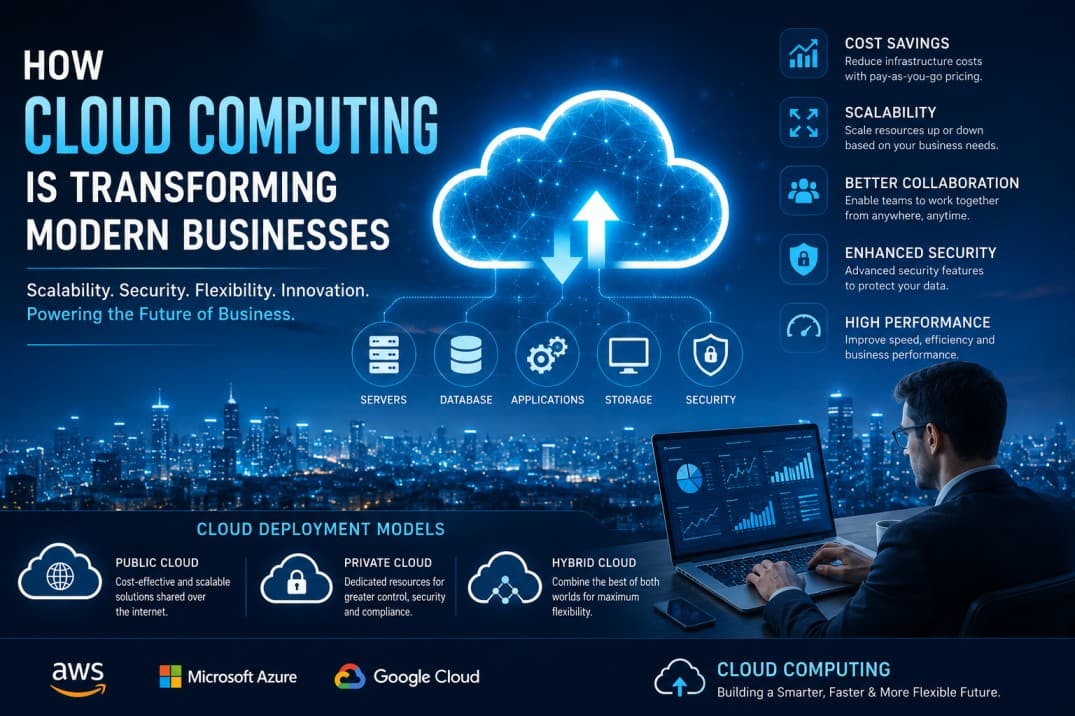
Cloud computing has become one of the most important technologies driving digital transformation across the world. Businesses of all sizes are moving their applications, data, and services to the cloud to improve flexibility, reduce costs, and increase operational efficiency.
From startups to global enterprises, cloud technology allows organisations to access computing resources over the internet instead of relying on traditional physical servers. This shift is changing how companies store data, run applications, collaborate with teams, and deliver services to customers.
As remote work and digital services continue growing, cloud computing is becoming essential for modern businesses that want to remain competitive in the fast-changing technology landscape.
What is Cloud Computing?
Cloud computing is the delivery of computing services such as servers, databases, storage, networking, and software over the internet. Instead of managing expensive physical infrastructure, businesses can use cloud platforms to access resources whenever needed.
Cloud service providers offer scalable solutions that allow companies to pay only for the resources they use. This makes cloud computing more affordable and flexible compared to traditional IT systems.
The three main types of cloud computing services include:
Infrastructure as a Service (IaaS) Platform as a Service (PaaS) Software as a Service (SaaS)
Popular cloud platforms used globally include Amazon Web Services (AWS), Microsoft Azure, and Google Cloud Platform.
Benefits of Cloud Computing for Businesses
Cloud computing provides several advantages that help organisations improve performance and productivity.
Cost Reduction
Traditional IT infrastructure requires expensive hardware, maintenance, and upgrades. Cloud computing reduces these costs by offering subscription-based services and scalable resources.
Businesses can avoid spending large amounts on physical servers and instead pay based on actual usage.
Scalability and Flexibility
Cloud platforms allow businesses to quickly increase or decrease computing resources depending on demand. This flexibility is especially useful for growing companies and online businesses.
For example, e-commerce websites can handle higher traffic during sales events without purchasing additional hardware.
Improved Collaboration
Cloud-based applications make remote collaboration easier for teams working from different locations. Employees can access files, documents, and software securely from anywhere with an internet connection.
Popular collaboration tools like Google Workspace and Microsoft 365 use cloud technology to support real-time communication and teamwork.
Faster Deployment
Businesses can launch applications and services much faster using cloud infrastructure. Developers can deploy software updates quickly without lengthy installation processes.
This helps companies innovate faster and respond more effectively to market changes.
Cloud Computing and Remote Work
The rise of remote work has increased the importance of cloud computing significantly. Cloud technology enables employees to work from home while accessing company resources securely.
Cloud-based systems support:
Video conferencing File sharing Remote project management Online collaboration Virtual desktop access
Businesses using cloud solutions can maintain productivity even when teams are distributed across different locations.
Remote work flexibility has become a major advantage for companies looking to attract skilled employees and improve work-life balance.
Cloud Security and Data Protection
Security is one of the most important aspects of cloud computing. Modern cloud providers invest heavily in cybersecurity systems to protect user data and applications.
Cloud security features often include:
Data encryption Multi-factor authentication Backup and disaster recovery Threat monitoring Access control management
Although cloud security has improved significantly, businesses must still follow best practices to protect sensitive information.
Companies should regularly update passwords, monitor user access, and train employees about cybersecurity risks.
The Role of Cloud Computing in Digital Transformation
Cloud computing plays a critical role in helping businesses adopt digital technologies and modernise operations.
Organisations use cloud platforms for:
Artificial Intelligence and Machine Learning
Cloud services provide powerful computing resources for AI and machine learning applications. Businesses can analyse large datasets and automate processes more efficiently.
Big Data Analytics
Cloud platforms help companies process and analyse huge amounts of data to gain business insights and improve decision-making.
Application Development
Developers use cloud environments to build, test, and deploy applications faster than traditional systems.
Internet of Things (IoT)
Cloud computing supports IoT devices by collecting, processing, and storing data from connected systems in real time.
These technologies are helping businesses become more innovative and customer-focused.
Types of Cloud Deployment Models
Businesses can choose different cloud deployment models depending on their needs and security requirements.
Public Cloud
Public cloud services are shared across multiple customers and managed by third-party providers. This option is cost-effective and highly scalable.
Private Cloud
Private cloud infrastructure is dedicated to a single organisation. It offers greater control and security but usually requires higher costs.
Hybrid Cloud
Hybrid cloud combines public and private cloud systems. Businesses can keep sensitive data in private environments while using public cloud resources for flexibility.
Many enterprises prefer hybrid cloud strategies because they balance performance, scalability, and security.
Challenges of Cloud Computing
Despite its many benefits, cloud computing also has some challenges that businesses should consider.
Common cloud computing challenges include:
Internet dependency Data privacy concerns Service downtime risks Vendor lock-in Compliance requirements
Businesses should carefully choose reliable cloud providers and create backup strategies to minimise risks.
Planning and proper cloud management are essential for successful cloud adoption.
Future Trends in Cloud Computing
Cloud computing continues evolving rapidly as technology advances.
Important future cloud trends include:
Multi-Cloud Strategies
Businesses are increasingly using multiple cloud providers to improve reliability and reduce dependency on a single vendor.
Edge Computing
Edge computing processes data closer to users and devices, reducing latency and improving performance for real-time applications.
Serverless Computing
Serverless technology allows developers to run applications without managing infrastructure manually.
Green Cloud Technology
Cloud providers are investing in energy-efficient data centres and sustainable technologies to reduce environmental impact.
AI-Powered Cloud Services
Artificial Intelligence will continue improving cloud automation, security monitoring, and resource optimisation.
These innovations will make cloud computing even more powerful and accessible in the future.
Conclusion
Cloud computing has transformed the way businesses operate in the digital era. It offers scalability, flexibility, cost savings, and improved collaboration for organisations of all sizes.
As companies continue adopting digital technologies, cloud computing will remain at the centre of innovation and business growth. Businesses that invest in cloud solutions today will be better prepared for future technological advancements and market demands.
Understanding cloud computing is becoming essential for developers, entrepreneurs, and organisations that want to succeed in the modern digital world.