The Future of Artificial Intelligence in Everyday Technology
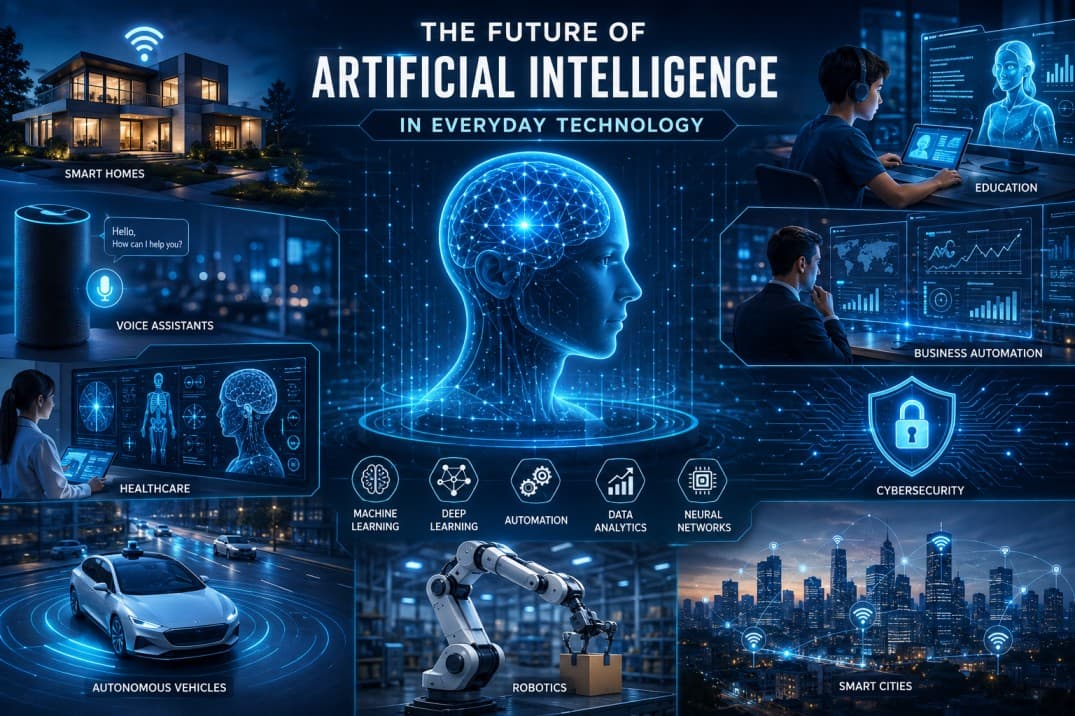
Artificial Intelligence (AI) is rapidly changing the way people interact with technology in daily life. From smartphones and virtual assistants to healthcare systems and smart homes, AI has become one of the most powerful innovations of the modern digital era. Businesses, students, developers, and consumers are increasingly depending on AI-powered tools to improve productivity, automate tasks, and make smarter decisions.
Technology companies around the world are investing billions of dollars into AI research and development because the future of digital transformation depends heavily on intelligent systems. AI is no longer a futuristic concept seen only in movies; it is now integrated into applications, websites, software, and devices that millions of people use every day.
What is Artificial Intelligence?
Artificial Intelligence refers to computer systems that can perform tasks that normally require human intelligence. These tasks include learning, problem-solving, speech recognition, decision-making, image analysis, and language understanding.
AI works using large amounts of data and machine learning algorithms that allow systems to improve their performance over time. Modern AI systems can analyse user behaviour, predict outcomes, and automate complex processes with impressive accuracy.
Some common examples of AI technology include:
Voice assistants like Siri and Google Assistant Chatbots for customer support Recommendation systems on Netflix and YouTube AI-powered search engines Self-driving vehicle technology Smart home automation systems
AI technology is becoming more advanced every year, making digital experiences faster, smarter, and more personalised.
AI in Smartphones and Smart Devices
Smartphones are among the most common examples of AI integration. Today’s mobile devices use AI for facial recognition, camera optimisation, voice commands, battery management, and predictive typing.
AI-powered cameras can automatically adjust lighting, detect objects, and improve image quality instantly. Virtual assistants help users manage schedules, search information, and control smart devices using voice commands.
Smart home devices are also becoming increasingly intelligent. Smart speakers, security cameras, thermostats, and lighting systems use AI to understand user preferences and automate daily activities.
Benefits of AI-powered smart devices include:
Improved convenience Better energy efficiency Enhanced security features Faster task automation Personalised user experiences
As Internet of Things (IoT) technology continues to grow, AI will become even more deeply connected to smart homes and connected devices.
The Role of AI in Healthcare
Healthcare is one of the industries benefiting the most from Artificial Intelligence. AI systems can analyse medical data, assist doctors in diagnosing diseases, and improve patient care.
Machine learning algorithms are helping hospitals detect serious conditions such as cancer, heart disease, and diabetes at earlier stages. AI-powered software can process large medical datasets much faster than humans, allowing healthcare professionals to make more accurate decisions.
AI is also improving healthcare through:
Medical Imaging Analysis
AI tools can scan X-rays, MRIs, and CT scans to identify abnormalities with high precision. This reduces diagnosis time and helps doctors detect diseases more efficiently.
Virtual Health Assistants
AI chatbots and virtual assistants help patients schedule appointments, receive medication reminders, and access healthcare information online.
Drug Discovery and Research
Pharmaceutical companies use AI to speed up drug development processes and identify potential treatments for diseases more effectively.
The future of AI in healthcare looks extremely promising, especially as medical technology becomes more data-driven and automated.
Artificial Intelligence in Education
The education industry is also evolving because of AI-powered learning systems. Online education platforms now use intelligent algorithms to personalise learning experiences for students.
AI helps teachers and students through:
Automated grading systems Personalised course recommendations Smart tutoring platforms Language translation tools Virtual classrooms
Students can learn at their own pace using AI-driven educational software that adapts based on their performance and learning style.
Educational institutions are also using AI for administrative automation, attendance systems, and performance analysis. This improves efficiency while allowing teachers to focus more on student engagement and learning quality.
AI and Business Automation
Businesses are adopting AI to improve productivity, customer experience, and operational efficiency. AI-powered automation reduces manual work and helps companies save time and money.
Many organisations use AI for:
Customer Support Automation
AI chatbots provide instant customer service support 24/7. They can answer common questions, solve simple issues, and improve response times.
Data Analysis and Predictions
AI systems analyse large amounts of business data to identify trends, customer behaviour, and future opportunities.
Marketing Optimisation
Digital marketing platforms use AI to create targeted advertising campaigns, improve SEO strategies, and personalise user experiences.
Human Resource Management
Companies use AI for resume screening, employee performance analysis, and recruitment automation.
AI-powered business solutions are helping companies become more competitive in the digital economy.
Cybersecurity and AI Protection
As cyber threats continue to increase globally, AI is playing a critical role in cybersecurity protection. AI systems can detect suspicious activity, identify malware, and respond to threats faster than traditional security methods.
Modern cybersecurity tools use machine learning to analyse patterns and prevent data breaches before they happen. AI can continuously monitor systems and automatically respond to unusual behaviour.
Benefits of AI in cybersecurity include:
Faster threat detection Automated security monitoring Improved fraud prevention Real-time attack analysis Enhanced data protection
However, cybersecurity experts also warn that hackers are beginning to use AI for advanced cyberattacks. This means organisations must continue investing in stronger AI-based defence systems.
Future Trends of Artificial Intelligence
The future of AI technology is expected to bring major advancements across multiple industries. Experts predict that AI will continue improving automation, robotics, communication, and digital intelligence.
Some important future AI trends include:
Generative AI
Generative AI tools can create text, images, videos, music, and software code automatically. These tools are transforming content creation and software development industries.
AI-Powered Robotics
Robots powered by AI will become more common in manufacturing, logistics, healthcare, and customer service industries.
Autonomous Transportation
Self-driving cars and intelligent transportation systems are expected to become more advanced and reliable in the coming years.
Smart Cities
Governments are using AI technology to improve traffic management, public safety, energy efficiency, and urban planning.
Advanced Human-AI Collaboration
AI assistants will become more capable of supporting professionals in coding, research, design, and decision-making tasks.
The growth of AI technology will continue shaping the future of work, communication, and digital transformation globally.
Challenges and Ethical Concerns of AI
Despite its advantages, Artificial Intelligence also creates important ethical and social challenges.
Some common concerns include:
Data privacy issues Job automation and unemployment risks Bias in AI algorithms Security risks Lack of transparency in decision-making
Governments and technology companies are working on AI regulations and ethical guidelines to ensure responsible AI development.
It is important for businesses and developers to create AI systems that are fair, transparent, secure, and beneficial for society.
Conclusion
Artificial Intelligence is transforming the modern world faster than any previous technological revolution. From healthcare and education to business automation and cybersecurity, AI is improving efficiency, convenience, and innovation across industries.
As technology continues evolving, AI will become even more integrated into everyday life. Businesses that adopt AI early will gain competitive advantages, while individuals who learn AI-related skills will have better opportunities in the future job market.
The future of Artificial Intelligence is full of possibilities, and its impact on society will continue growing in the years ahead. Understanding AI technology today is essential for preparing for tomorrow’s digital world.