The Complete Guide to Men's Formal Dressing in 2026
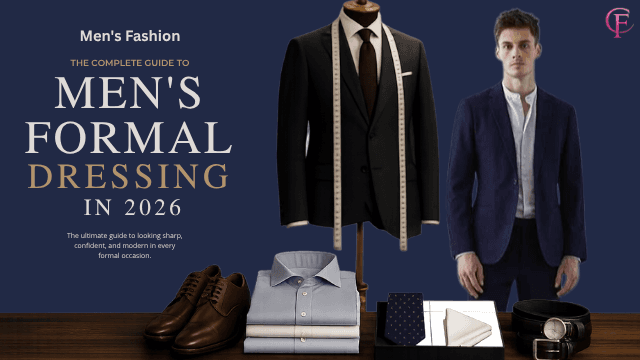
Formal dressing for men has changed significantly over the past decade. The stiff, rigid rules of the boardroom are loosening — but that does not mean anything goes. In 2026, men's formal style is about looking polished, intentional, and modern without being uncomfortable or outdated. Whether you are dressing for a job interview, a wedding, a business meeting, or a formal event, this guide covers everything.
The Foundation — Understanding Dress Codes
Not all formal occasions are the same, and understanding what each dress code actually means saves you from showing up overdressed or underdressed.
Business Formal — This is the most traditional: a full suit (jacket and matching trousers), dress shirt, tie, and leather dress shoes. Colours to reach for: navy, charcoal, mid-grey, and classic black for evenings.
Business Casual — A step down in formality. Tailored trousers (not jeans) with a shirt, potentially with or without a jacket. Clean loafers or Oxford shoes. A blazer adds polish without requiring a full suit.
Smart Casual — Well-fitted jeans or chinos, a button-down or smart polo, and clean footwear. This is the most flexible of the formal codes and allows for the most personal expression.
Black Tie — Reserved for formal evening events. A tuxedo (or dinner suit), black bow tie, white dress shirt with a pleated front or bib, and black patent leather shoes.
The Perfect Suit — What to Look For
A suit is the cornerstone of men's formal dressing. Getting it right makes everything else easier.
Fit first, always. A suit that fits well looks expensive even if it was not. A badly fitted expensive suit looks cheap. The jacket shoulder seam should sit exactly at your shoulder edge — not drooping off it. The trouser hem should just touch the top of your shoe. The jacket should button comfortably without pulling across the chest.
Fabric matters. For year-round wear, a mid-weight wool or wool-blend suit is the most versatile. For summer, look for linen or lighter tropical wool. For winter, heavier flannel or tweed works beautifully.
Start with navy or charcoal. These are the two most versatile suit colours for any man building his formal wardrobe. Both work for interviews, weddings, business meetings, and formal events. Black is often considered too funereal for daytime events — save it for evening.
Shirts, Collars, and Ties
A dress shirt should be made of 100% cotton if possible — it looks crisper, breathes better, and irons more cleanly. The collar should sit neatly against the collar of your jacket without gaping or being so tight it creases.
Collar choices: The semi-spread collar is the most universally flattering and versatile — it works with or without a tie and suits most face shapes. The classic point collar is traditional and works beautifully with narrower ties.
Ties: In 2026, ties are optional for most business contexts but remain expected at interviews and formal events. Keep your tie length reaching the top of your belt buckle. Width should roughly match the width of your jacket lapel — both medium width is the safest, most timeless choice.
Shoes and Their Importance
In formal dressing, shoes are noticed more than people realise. Worn, unpolished, or wrong-style shoes can undermine an otherwise excellent outfit.
Oxford shoes (closed lacing) are the most formal and work best with suits and business formal outfits. Derby shoes (open lacing) are slightly less formal but highly versatile. Loafers — particularly the penny loafer or tassel loafer — work beautifully for smart casual and business casual settings.
Colour: Black is most formal and works with navy and charcoal suits. Brown and tan shades work beautifully with navy, brown, and mid-grey suits. Never brown shoes with a black suit — it is a classic rule worth keeping.
Accessories That Elevate
Pocket square — Adds personality and polish to any suit. A simple white pocket square in a flat fold is the safest and most elegant option. More elaborate folds and patterns work for personal occasions.
Watch — A clean, simple watch elevates a formal outfit instantly. It does not need to be expensive — a classic strap watch in leather or metal on a clean face works beautifully.
Belt or braces — Your belt should always match your shoes in colour and finish. Braces (suspenders) are a bold but very stylish alternative for those who love them — and they work brilliantly with high-waisted trousers.
The Modern Approach to Formal
In 2026, the smartest approach to formal dressing is investing in a small number of impeccably fitted, quality pieces rather than a large wardrobe of mediocre items. One great navy suit, three quality dress shirts, two pairs of quality shoes, and a handful of thoughtful accessories will carry you through almost every formal occasion you will face.
Formal dressing is not about restriction — it is about respect for the occasion and confidence in how you present yourself. Get the fit right, invest in quality where it matters, and wear it with confidence.