The Importance of Digital Marketing for Modern Businesses
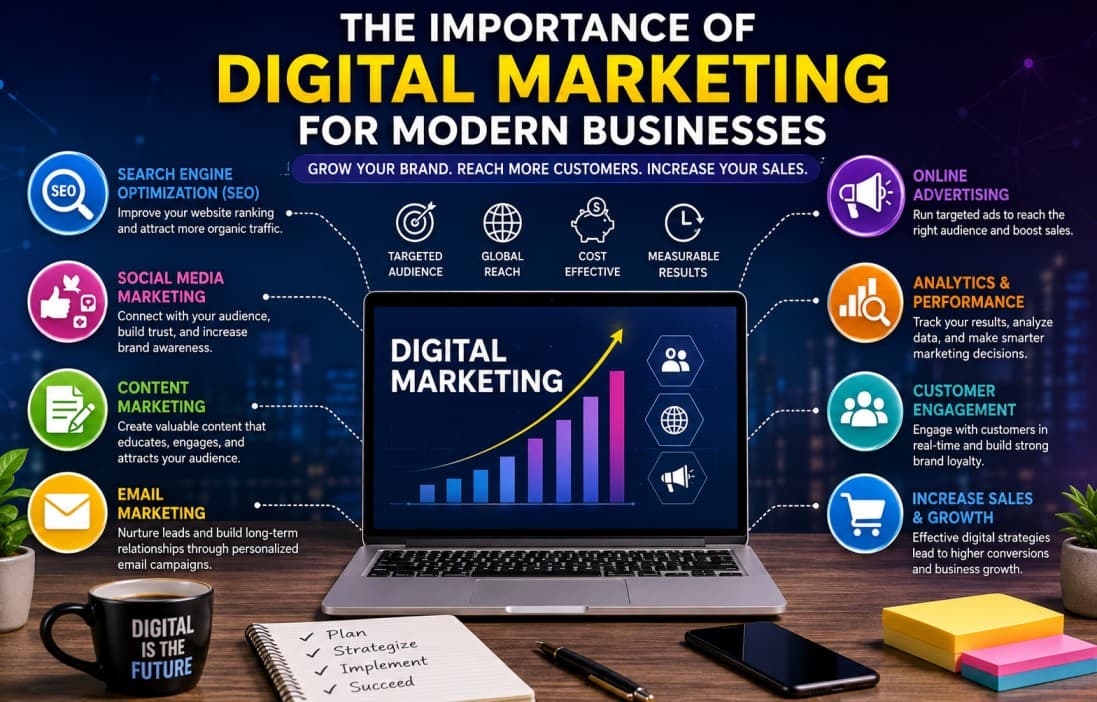
Digital marketing has become one of the most powerful tools for modern businesses in today’s internet-driven world. As more people spend time online using smartphones, social media platforms, and search engines, companies are increasingly shifting their marketing strategies from traditional advertising to digital platforms.
Businesses of all sizes now use digital marketing to reach customers, build brand awareness, increase sales, and grow their online presence. From small startups to global companies, digital marketing plays a major role in business success and customer engagement.
In 2026, digital marketing continues evolving rapidly with the growth of Artificial Intelligence, social media platforms, video content, and personalised advertising strategies.
What is Digital Marketing?
Digital marketing refers to promoting products, services, or brands using online platforms and digital technologies.
Common digital marketing channels include:
Search engines Social media platforms Email marketing Websites and blogs Video marketing Online advertisements
Digital marketing allows businesses to reach targeted audiences more effectively compared to traditional marketing methods.
Modern consumers often search online before purchasing products or services, making digital visibility extremely important for businesses.
Benefits of Digital Marketing
Digital marketing provides several advantages that help businesses grow faster and compete more effectively.
Global Audience Reach
Businesses can promote products and services to customers worldwide using digital platforms.
Unlike traditional advertising, online marketing allows companies to reach large audiences without geographical limitations.
Cost-Effective Marketing
Digital marketing is often more affordable than television, newspaper, or billboard advertising.
Small businesses can use social media and SEO strategies to attract customers with lower marketing costs.
Better Customer Engagement
Social media platforms help businesses communicate directly with customers through comments, messages, and interactive content.
Customer engagement improves trust, loyalty, and long-term business relationships.
Performance Tracking
Digital marketing tools allow businesses to track:
Website traffic Customer behaviour Advertising performance Conversion rates Sales growth
This data helps companies improve marketing strategies more effectively.
Search Engine Optimization (SEO)
SEO is one of the most important parts of digital marketing.
Search Engine Optimization helps websites rank higher on search engines like Google, increasing visibility and organic traffic.
Benefits of SEO
SEO helps businesses:
Increase website visitors Improve online visibility Build brand credibility Generate long-term traffic Improve customer trust Important SEO Strategies
Popular SEO practices include:
Keyword optimization Fast website performance Mobile-friendly design High-quality content creation Internal linking Technical SEO improvements
Businesses investing in SEO often achieve stronger long-term online growth.
Social Media Marketing
Social media platforms are among the most powerful digital marketing tools today.
Popular platforms include:
Instagram Facebook LinkedIn YouTube TikTok X (Twitter) Benefits of Social Media Marketing
Social media helps businesses:
Build brand awareness Increase customer engagement Promote products quickly Run targeted advertisements Connect with younger audiences
Visual content such as short videos, reels, and infographics perform especially well on social platforms.
Businesses that create consistent and engaging social media content often attract loyal audiences.
Content Marketing and Blogging
Content marketing focuses on creating valuable information that attracts and educates customers.
Popular content formats include:
Blog articles Videos Infographics Podcasts Tutorials Importance of Blogging
Business blogs help improve:
SEO rankings Website traffic Brand authority Customer trust
High-quality content provides useful information while helping businesses appear more professional and trustworthy online.
Consistent content creation remains one of the most effective long-term marketing strategies.
Online Advertising and Paid Campaigns
Businesses use paid advertising to increase visibility and attract customers quickly.
Popular online advertising methods include:
Google Ads Social media ads Video advertisements Influencer promotions Display advertising Benefits of Paid Advertising
Paid campaigns help businesses:
Reach targeted audiences Generate leads faster Increase product sales Improve brand awareness
Digital advertising platforms allow detailed audience targeting based on interests, location, behaviour, and demographics.
This improves marketing efficiency and return on investment.
Email Marketing and Customer Retention
Email marketing remains one of the most effective ways to maintain customer relationships.
Businesses use email campaigns for:
Promotions Product updates Newsletters Customer support Special offers Benefits of Email Marketing
Email marketing helps:
Increase customer loyalty Improve repeat sales Build direct communication Maintain long-term engagement
Personalised email campaigns often achieve better customer response rates.
Automation tools also make email marketing more efficient and scalable.
Artificial Intelligence in Digital Marketing
Artificial Intelligence is transforming digital marketing strategies rapidly.
AI tools help businesses with:
Customer behaviour analysis Automated chatbots Content recommendations Advertising optimization Predictive analytics AI-Powered Marketing Benefits
AI improves:
Marketing efficiency Personalisation Customer targeting Data analysis Campaign performance
Many businesses now use AI-based tools to improve customer experiences and automate marketing processes.
Technology will continue changing the future of online marketing.
Challenges in Digital Marketing
Despite its advantages, digital marketing also has challenges.
Common challenges include:
High competition Changing algorithms Data privacy concerns Content saturation Ad fatigue
Businesses must continuously update strategies and stay informed about digital trends to remain competitive.
Consistency, creativity, and adaptability are important for successful online marketing.
Future Trends in Digital Marketing
Digital marketing continues evolving through technology and changing consumer behaviour.
Important future trends include:
Short-Form Video Content
Short videos and reels continue dominating social media engagement.
Voice Search Optimization
Voice assistants are increasing the importance of conversational SEO.
Influencer Marketing Growth
Brands increasingly collaborate with creators and influencers for promotions.
AI-Generated Content
Artificial Intelligence tools are supporting content creation and marketing automation.
Personalized Customer Experiences
Businesses are focusing more on personalised marketing strategies based on customer behaviour.
The future of digital marketing will become more data-driven, automated, and interactive.
Conclusion
Digital marketing has become essential for modern businesses that want to grow and succeed in the competitive online world. SEO, social media marketing, content creation, and online advertising all play important roles in building strong digital brands.
As technology continues evolving in 2026, businesses that adapt to digital marketing trends will gain significant advantages in customer engagement and business growth.
Strong digital marketing strategies help businesses increase visibility, improve customer relationships, and achieve long-term success in the digital economy.